(This is the sequel to Part 1 here.)
Regarding the upcoming amendment to the Food Labelling Standards, public comments were solicited (from Dec 26, 2025, to Jan 30, 2026) on the Draft Cabinet Office Ordinance(details are here in Japanese). As the proposed amendments are extensive and complex, this article provides an overview of the key points based on Material 2: Partial Amendment of the Food Labelling Standards(Japanese) presented at the 80th Food Labelling Subcommittee.
Summary of the proposed Amendments
1. Amendment of labelling rules for individual food items (derived from the former Japanese Agricultural Standards (JAS))
Following last year’s amendment, respective individual rules for 22 food items on ingredient names, additives, net content declarations, labelling prohibitions, and related requirements are additionally scheduled to be abolished. This process also includes amending certain food definitions and legal names. The individual classification for “Mixed Pressed Ham” is set to be discontinued entirely.
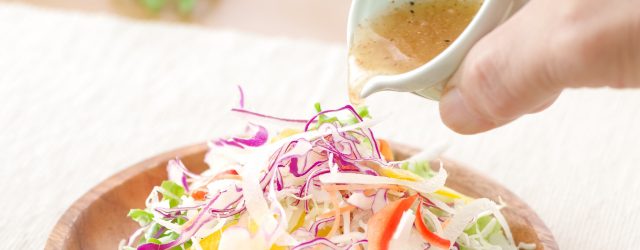
Example 1: Dressings other than mayonnaise (such as “salad creamy dressing”, “semi-solid dressing”, “emulsified liquid dressing”, and “separated liquid dressing”) are to be labelled simply as “dressing”. In addition, dressing-type seasonings may be labelled as “non-oil dressing”, provided they meet the relevant definition.
Example 2: The specific definitions for individual oil types of edible vegetable oil and fat (such as “edible safflower oil”, edible grape seed oil, and “edible soybean oil”) are planned to be abolished. They are to be replaced by a more comprehensive definition, “oils extracted from plant seeds or pulp and processed to be suitable for human consumption”. Along with this change, the labelling names are to be revised.
Example 3: The previous rule permitting labeling formats that grouped multiple fruits under a collective heading such as “Fruits” followed by parentheses where each fruits name are listed by weight to show their ingredients ranked third or lower by weight collectively as “Others”* has been abolished. As the collective label “Others” is currently used in practice only for citrus fruits, new guidance on the collective labeling of “Citrus Fruits” will be added to the official Q&A to clarify labeling requirements for industry stakeholders.
*Example of labeling under the current rules: “Fruits (Satsuma mandarin, Iyokan, Others)”
2. Amendment of labelling rules for individual food items (derived from the former Food Sanitation Act)
Requirements that are considered adequately covered by the cross-sectional (“horizontal” standards that are common to all foodstuffs) mandatory labelling rules, and quality-related items deemed unnecessary for mandatory labelling are to be abolished. Other requirements will be adjusted (below we provide examples of each case).
Example 1: Labelling items to be abolished
Meat products: “Sterilization method”, “pH value and water activity (Non-heat-treated meat products)”
Dairy products: “Weight percentage of non-fat milk solids and milk fat” and “Fact that the product was heat-sterilized after being placed in the container or package (Natural cheese)”
Example 2: Labelling items to be maintained
Meat products: “The product is a non-heat-treated meat product”
Dairy products: “The product must be heated before consumption”
Frozen foods: “Whether or not heating is required before consumption”
Example 3: Labelling items to be amended
Frozen foods: The expression, “heated before freezing” which is used to indicate whether a product was heated immediately prior to freezing, will be changed to the more explicit wording “heated immediately before freezing”
3. Amendment to food allergen labelling
Cashew nuts will be reclassified as mandatory labelling items for allergens, and pistachios will be added to the list of recommended labelling for allergens.
(See more details about this topic in this previous article.)
Future Schedule
Following consultation with the Consumer Commission, the amendments are expected to be finalized and enacted in the near future. As for the transitional periods, the amendments of labelling rules for individual food items in 1 and 2 above are expected to apply until March 31, 2030, while the above-mentioned amendments to allergen labelling are expected to apply until March 31, 2028.
Since the proposed amendments to labelling rules for individual food items (derived from the former JAS Act) (discussed in part 1 of this article) are particularly complex, the materials by the Consumer Commission—namely Future Issues for Consideration in Food Labelling by the Subcommittee (Japanese) and Results of Two Years of Deliberations(Japanese)—have been well-organized for clarity. These materials provide a useful reference for readers who wish to grasp the overall scope of the review.
Note: All labeling is required to be in Japanese; English terms are used here for explanatory purposes only.
Share/Like/Follow:








Newsletter Signup
We issue monthly e-newsletters, which provide you with the latest updates on food labeling/regulations in Japan.
If you want to make sure to not miss any issue, please click below.

Related Service
Research Services on Ingredients & Food Labeling -For the Japanese Market-
We verify the conformity of ingredients and additives with the standards for use in Japan based on specifications such as formulation lists. We also verify the conformity of the proposed labeling of ingredient names, nutrients, etc. with the labeling standards based on specifications such as formulation lists.

Label bank Co., Ltd. CEO (Founder)
Born in Japan. Working on solving various issues related to food labeling operations. Also regularly gives lectures for various organizations in Japan.
Co-authored ‘A Practical Guidebook to Food Labeling for Export – from scratch‘ and ‘2nd Revised Edition: Guidebook Food Labeling Law and related business practical points – from scratch‘ (DAI-ICHI HOKI CO., LTD).